
Why a Coach Beats an Algorithm — And What the Research Says
Anyone selling you on the idea that AI is going to replace personal trainers in the next five years has never tried to get a busy 45-year-old to actually do her workout on a Tuesday.
I say this as someone bullish on AI. I use it daily. I think it will reshape my industry.
It is also, by itself, going to fix almost nothing about why people don't change their bodies. Because the constraint has never been knowledge.
The 30-year finding nobody talks about
For at least three decades, behavior change research has repeatedly found the same thing: the gap between what people know and what they do is not closed by giving them more information.
Webb et al.'s 2010 meta-analysis in the Journal of Medical Internet Research evaluated 85 internet-delivered behavior change interventions. The overall pattern: small but real effects on knowledge, intentions, and short-term behavior; modest and often non-durable effects on long-term behavior change.
Compare that to studies of human-coached interventions. The literature on health coaching, motivational interviewing, and supervised exercise is methodologically heterogeneous, but the directional finding is consistent: programs with sustained human contact produce better adherence and better long-term outcomes than purely digital, information-only, or self-directed alternatives.
Effect sizes vary by population, condition, and methodology — and head-to-head AI-vs-human-coach trials in fitness specifically are still rare — but the underlying pattern is durable.
Why? Because the human brain is wired for social accountability in a way that an unobserved app generally is not. We will let ourselves down. We have a much harder time letting down a person who knows our name, asks about our weekend, and remembered we said we'd hit a 95-pound deadlift this month.
What this looks like in practice
The best AI can write you a perfect program. It cannot reliably make you do it.
The best AI can answer any nutrition question. It cannot keep you from eating your kid's leftover mac and cheese standing at the counter at 9 PM.
The best AI can model your training data flawlessly. It cannot be the variable that makes you walk into a gym on the day your back hurts and your meeting ran long.
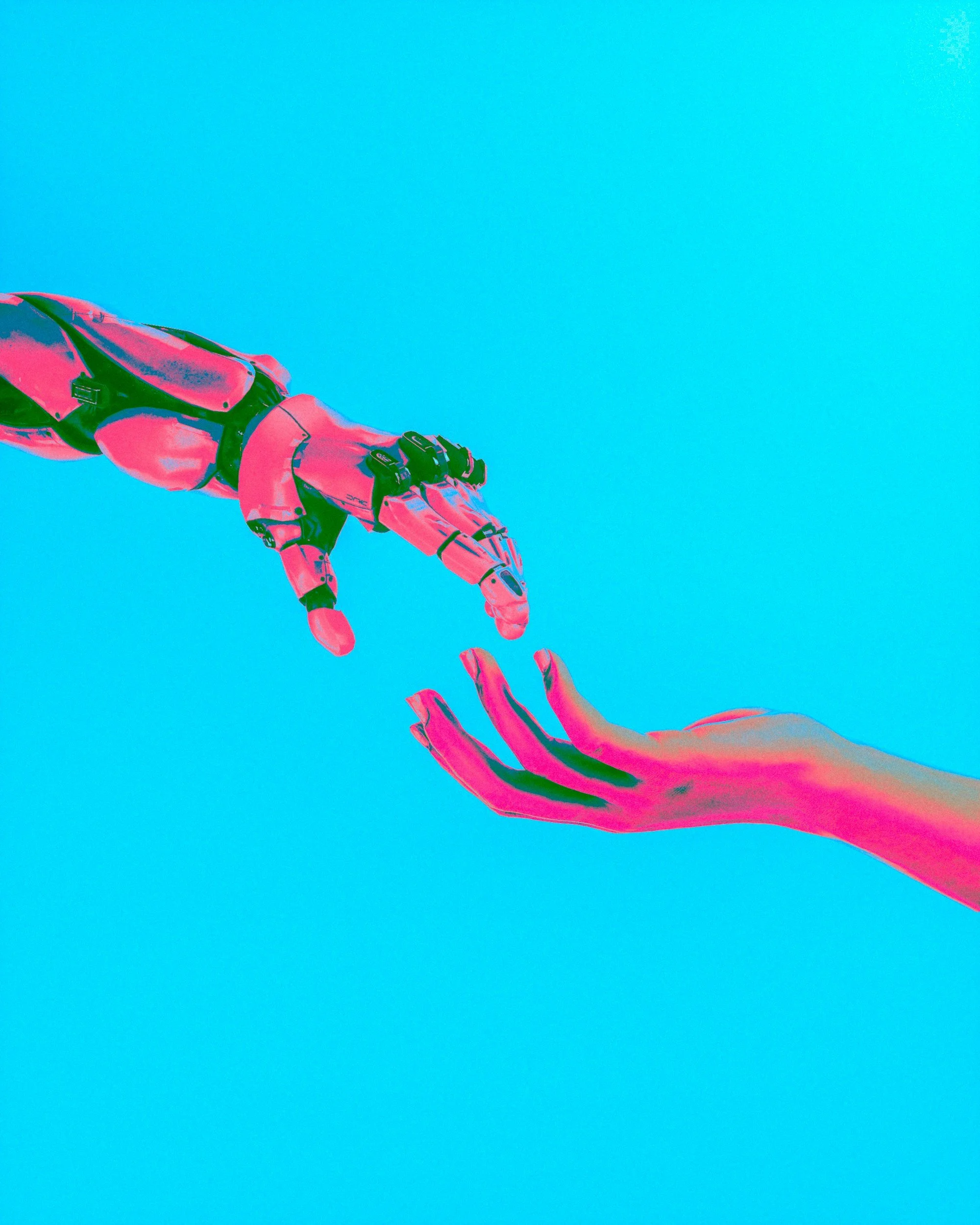
This is not a knock on AI. It's a structural observation about human change. The thing that moves people from intention to action is, with depressing reliability, another person.
I tell every client at RHP: you are not paying for the workout. You are paying for the system that makes the workout happen. Programming, environment, relationship, community, the slight social cost of not showing up — all of that is the offer. The exercises are almost incidental.
The hardest problem in every transformation, personal or organizational, is compliance. Knowledge is cheap. Implementation is the moat.